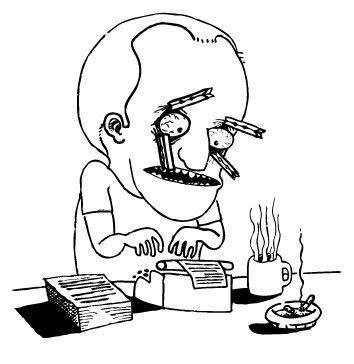
The 3 Day Novel Contest: Oh The Horror!

This slideshow requires JavaScript.

Yesterday the 3 Day Novel Contest wound up at midnight.  In three days contestants write a novel.  Yup, that’s right.  It’s a short novel – a novella really – but it is complete – 18,000 words in three days.
cts
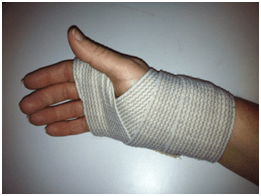
18,000 words in 3 days = carpal tunnel!

It is the second time I have entered this contest.  The first time I was unprepared.  Oh, I read all the hints and suggestions on the web page, including their Survival Guide but NOTHING prepares you for the actuality of writing almost non-stop for three days until you have a completed novella. It is a crazy rollercoaster of a weekend.

life-as-a-rollercoaster

The first time I entered, I had an idea semi-formed, but when I sat down to write, the whole thing flew out the window and I went in an entirely different direction.  This worked out well for me as it ended up with the publication of Greenwich List.

This time, I decided to take an idea that had been floating around in my head for five years.  I outlined the story in five ‘acts’.  It seemed like a clever idea at the time.  But, as with the first year, all my cleverness turned out to be useless.
5ff7762922c109819ccb35bea2488d0b


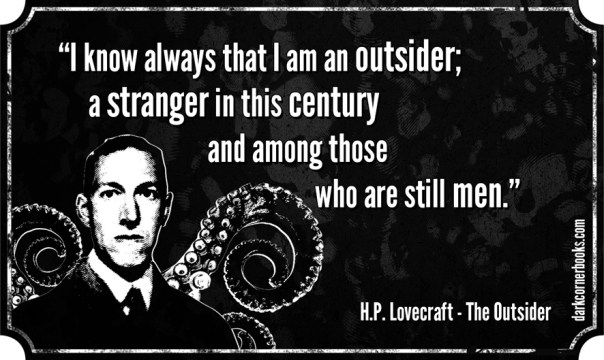
I did hold onto my idea, however.  This idea was like a friend.  She had been sitting with me for five long years – tapping at my brain saying “Write me!  Write me!  You know you want to!”  So that’s what I did.  I took my friend and wrote the story that had been clamouring to come out for all these years.  You might be saying now, ‘Diane, what was that idea?’  Well, sorry, not going to tell you.  It came out over the weekend as a novella, but I am planning on turning it into either a full-length novel or part of a collection of stories so you will just have to wait.  I will tell you, however, that it was a horror story. The first I have ever written!  And, while I think I pretty much got it right, I went back afterwards and looked what HP Lovecraft had to say about the genre.  Some of what he wrote is now a bit out of date, but much of it is timeless, especially in regards to weird or horror fiction.
quotes-h-p-lovecraft-4

Rules and Themes of Horror Writing as Adapted from HP Lovecraft


The true weird tale has to rule. A certain atmosphere of breathless and unexplainable dread of outer, unknown forces must be present; and there must be a hint, expressed with a seriousness and portentousness becoming its subject, of that most terrible conception of the human brain–a malign and particular suspension or defeat of those fixed laws of Nature which are our only safeguard against the assaults of chaos and the daemons of unplumbed space. – HP Lovecraft


oct-2011-the-writing-on-the-wall


  • There are two categories of “weird” fiction (which includes horror).
    • The horror expresses itself in some unexpected condition or phenomena.
    • The horror expresses itself in a character’s behaviours which are connected in some way to a bizarre condition or phenomena.
  • Each weird/horror story involves five definite elements
    • some basic, underlying horror or abnormality in character or setting.
    • how the horror affects the characters/setting/etc..
    • how the horror presents itself; what does it do & how does it do it?
    • how do the characters react to the horror?
    • how does the horror act within the given circumstances or ‘world rules’ set out in the story.
  • There must be the “maintenance of a careful realism” within the operating rules of the world created throughout the story except in the aspects that are impacted by the horror.
  • The horror must have carefully contrived emotional build up. All that a horror story should be is “a vivid picture of a certain type of human mood”.
    • subtle suggestions of emotion or clues to the horror or characters’ responses are key.
    • use “imperceptible hints and touches of selective associative detail which express shadings of moods” to make the unreality of the horror seem real even though we “suspend or violate the illusion of time, space, and natural law”
    • Avoid lists of incredible events which add no substantive meaning to the horror.
  • There needs to be an air of ‘awe and impressiveness’ around the horror.


HP Lovecraft was the master of weird fiction and was a great story-teller.  His rules for writing are basic and can apply to any fiction writing.

  1. Write out the chronology of the story.
  2. Write out the order of narration of the story.
  3. Write the story in order of #2.  Write it quickly and without criticism – that will come later.
  4. Revise, revise, revise!!!
  5. Do a neat, well-formated copy.

Good advice for all of us.

Discovering a New Facet to the Diamond that is Writing

Last night I did something that I had been intending to do for… well, years.  I attended and read at a spoken word event.  In my little town, there is a funky little performance space called The Duncan Showroom.  It is a favourite location for musicians because of the intimate atmosphere.  Nick and I had gone down on Sunday to hear Sam Weber and his band play.  Sam was a student of mine and was in the same grad class as my daughter so I was truly looking forward to hearing him play.  I wasn’t disappointed. He and his band were fabulous and fun and it was a great show.  


When we were leaving, I looked up on their bulletin board and noticed a little piece of paper. As small as the paper was, the words seemed huge and they reached out and grabbed me by the throat.

For The Love of Words

Well, this seemed like a sign – and last night I showed up, added my name to the list and plunked my bottom into a front row seat. There is something that you don’t get from the solitary action of plunking away at your computer that is available in abundance in a reading – feedback. As I read, I could hear chuckles and out and out guffaws as I read my “Open Letter to an Unnamed GPS Executive”. And later, several people came up and congratulated me on my writing.  What a great feeling that is! I will be back there again to read something else – probably some poetry – later in the summer. So… here I am, reading last night.

**warning – there are a couple of f-bombs and a bit of other adult language.


If you want to see the whole show, click here.


na·ive·té

Gail and I hadn’t seen each other in at least a year.  This is a pattern in our friendship that does not in any way diminish the enjoyment we get in spending time together. I love Gail because she is honest yet kind.  She is a great believer in “not my monkeys, not my circus” – a philosophy around which I try to live my own life.  When she arrived, there were two paintings lying on my kitchen table.  Nick and I had, on the previous Tuesday, been to a ‘sip and paint’ party at a local pub.  One of the things that I truly love about being married to Nick is that he does not subscribe to the machismo that some men find necessary to protect their own fragile egos.  I can tease Nick about going on a ‘bro-date’ when he hangs out with one or another of his buddies and he doesn’t get weird or defensive about it.  He is also completely comfortable hanging out with a bunch of women.  In fact, I think he actually likes hanging out with women. You see, Nick is an introvert.  He likes being around people, as long as he gets some alone time.  And he prefers to sit and listen rather than jump into the middle of a conversation.  As far as my friends go, this is a good thing because we could talk the leg off… well, off a horse, donkey, table – anything that has a leg really. So, last Tuesday, Nick found himself in the Cobblehill Pub, surrounded by a large group of women, most of whom had one, or several glasses of wine in them. We were gathered there to all paint our versions of a west coast scene.  After a lot of laughter, we all walked away with a painting.

Back to Gail. She walked over to the table and gazed down at the two paintings.  “What’s this?” she asked. “Oh, Nick and I went to a painting night at the pub.” “That sounds like a lot of fun.” Now, something you should know about Gail, she is quite an accomplished artist. Her paintings hang in galleries regularly and she has been working on her craft and honing her talents for decades.  I LOVE that Gail’s only comment was, “…sounds like a lot of fun.” I know, and she knows that these are very amateurish paintings and, even though they will be hung up somewhere in our house, I am not so naive to think that we will be displacing Van Gogh or Monet or Leonardo in the Louvre any time soon. Or, in fact, be hanging in even the most desperate of galleries.  She is honest enough to not praise our work, but kind enough to say simply… “sounds like a lot of fun.”


As I was pondering the paintings (which are still lying on the kitchen table, BTW) and Gail’s kind response, I was reminded of the time I wrote my first novel, Greenwich List (yes, I have put a link here in the hopes that you will click and buy – gratuitous self-promotion is encouraged here). I wrote it over a Labour Day long weekend for the 3-day novel contest.  Oh, I was so naive back in those halcyon days of my youth in 2009. When I didn’t win anything, I decided to send the book off to a couple of publishers, sure in my inexperience that someone would want to publish it. So when I got a contract I was thrilled but not surprised.  Oh, what I know now and didn’t know then.  Naivete, thou art my middle name.

Screen Shot 2016-04-02 at 12.06.32 PM


I have been thinking (oh foolish girl) that perhaps I would do the 3-Day Novel Contest once more.  I went on Twitter (my current favourite time waster) and searched for the 3DNC. I eventually ended up at a tumblr page belonging to someone named “Miss Voltairine“. Now, anyone that would reference Voltaire on their tumblr page gets my vote, so I read, with interest, her lessons that she had learned from the 3DNC.  And here, with her kind permission, they are:


lessons from the three day novel contest, or, what you need to know about writing a novel in three days:

1. You totally can write a novel in three days if you have three days where you can write relatively uninterrupted. Yes, you can. No, really. This one is bolded because it’s the most important one.

2. A big part of this is condensing the entire emotional process of coming to terms with starting, working on, and finishing a novel into an incredibly short time frame. This is, like, so exhausting. 

3. A lot of people will tell you that sleep is optional but you don’t have to completely forego sleep to get this done.

4. It’s okay if you’re behind after the first day. The first day is the hardest. 

5. The third day is the easiest, and also the day when you will get the most work done. 

6. There is almost no way this novel will be good. You literally wrote it in three days, what are you expecting. There are publication and cash prizes for the official three day novel competition but you shouldn’t do it expecting to win. You’re probably not going to place. That’s fine. Your reward is that you now know you can produce a novel-length volume of work in three days.  

7. You will feel really stupid about failing NaNoWriMo in the past.

8. Keep some kind of record of how you feel while you’re doing it. 

9. Thank the people in your life for putting up with you doing this, especially if you live with other people. Especially if you share chores with those people. Especially if those people have to deal with you sitting in your underwear on the couch all day for three days. 

10. It helps to be as healthy as you can possibly be. 

11. Whether or not drugs will enhance your performance is something you need to work out for yourself. 

12. Make sure you have lots of snacks going in.

13. Remember to hydrate.

3-daynovelcontest

Now, here are a couple of hints that I would like to add.

  1. Read the 3DNC webpage.  It is full of good info.
  2. Remember that part way through, you will lose your mind.  Don’t worry, it will come back.
  3. Rule number 2 states “You are allowed, though not required, to develop ideas and an outline prior to the contest. You do not have to submit your outline, and you can change and adapt your novel as you see fit.” My advice is to MAKE AN OUTLINE.  Even if that is not the way you write normally.  There is nothing normal about writing a novel to completion (including editing) in three days and you will be sorry if you don’t.  Having said that, feel free to toss the outline in the bin if it isn’t working for you.  But do it early. You only have 72 hours, don’t waste 50 of it on writing from an outline that isn’t working.
  4. Register and send your money in early.  For most of us, $35 – even if it is Canadian dollars – is a heck of a lot of money. Writing, unless you are JK and have Harry Potter royalties making you richer than the Queen, does not pay well so committing your hard-won dollars (or pounds or euros or yen…) will actually get your bum in your computer chair and your fingers on the keyboard.  At least, it did for me.
  5. Oh, and stock up on highly caffeinated coffee – espresso would probably be best.  You will need a lot.  However much you think you will need, you need more.  Toss the chamomile tea, you don’t want to be falling asleep at your keyboard any more than necessary.
  6. As Miss Voltairine mentioned in #12.  Snacks.  Lots and lots of snacks.
  7. Finally, going into this contest with a little bit of naiveté is a good thing. It’s kind of like giving birth.  It doesn’t matter how many childbirth books you read, or how many women’s stories you hear – nothing, and I mean nothing, will prepare you for what childbirth will be like whether you are the one actually popping the kidlet out or the person whose hand is being crushed by the woman doing the popping. If you actually knew what it was going to be like, you might not even want to go there.  But, again like childbirth, there is something after you have recovered that makes you think – hey, maybe I should do that again.  Which. I am  going to do. Shoot me now.


Mando Method #amwriting

 This morning when I was – well let’s be honest – procrastinating over my writing, I found the hashtag #mandomethod followed by a number. I was intrigued. I clicked on #mandomethod and found all kinds of tweets that were similar – #mandomethod 417. #MandoMethod 381. #Mandomethod 591, not bad! What the heck was this Mando Method?  It didn’t take much searching for me to find the original blog post that explained what the Mando Method was. I won’t explain it. Just click on the link and you can read the post for yourself.  “Well, hell!” I said to myself. “This sounds like a great idea!” So, I set the stopwatch on my phone and started writing.  Twenty-one minutes later I had 201 words. TWO HUNDRED AND ONE!  If you took the time to link back to the original blog post, you would have seen the following:

Hour 1 – 493 words

Hour 2 – 644 words

Hour 3 – 602 words

Hour 4 – 596 words

Hour 5 – 677 words

Hour 6 – 550 words

Hour 7 – 585 words

Hour 8 – 781 words

Each of those represents 15 minutes of writing.  A quick search on Twitter and I came up with pretty similar numbers… including the following:

Screen Shot 2016-03-18 at 10.01.46 AM

Eight hundred and fifty-one? Really?  It’s not that I doubt @RidiculouslySpeedyWriter at all.  I have no doubt that this person wrote 851 words in 15 minutes.  What gets me is that I wrote 201 and that took me 21 minutes to write.  No wonder The Bastard of Saint Genevra took me five freaking years!  

So, I have decided that I am going to blame this on menopause.  New hashtag… #amwritingthroughmenopause.

https://www.youtube.com/watch?v=UyOAMI_yzxs


A Writer’s Lament and the Publishing Process

Exactly what I have been thinking. I think, at least in Canada and with smaller publishers, it is possible to get published without an agent. Having an agent certainly makes some things easier!

LionAroundWriting's avatarLionAroundWriting

By Dave Coverly

HAVING WRITTEN A full length manuscript and awaiting beta feedback, there’s a real emptiness as an almost-writer. I thought I’d be overjoyed at finishing a solid piece of work, but apart from occassional back slaps to myself in moments of reflection (no mirror involved), until I send the manuscript into a literary agent’s inbox, I won’t be satisfied, and even then I know I might face a lot of rejection until finding an agent who wants to work with me.

If you want to be published in print a literary agent is essential. First off the ‘bad’ news; they take 15% of earnings, but they deal with contracts home and abroad, they have industry contacts and knowledge of how it all works. By having a stake in you they have a vested interest in getting the best deal possible from a publisher. From what I can gather, you need one

View original post 272 more words

The Best Kind of Currency

pelikan-kolbenfc3bcller_u-_tintenglas_2006-07-26

There are many ‘ironical’ things about writing. A surface cursory glance tells the observer that it is a solitary venture. I know that there some authors out there who write as a team, but for the most part, those of us who write, do it alone. The truth, however, it that writing is much less a solitary venture that it first appears.  Sure, as I write this, or my short stories, or novels, or poetry, or essays I am placing my fingers on the keys and I am putting my thoughts into pixels that will be saved onto this blog or that doc or the other pdf and I am clicking save.  But when I finally get enough pixels and characters and words together to create a book or an article, this begins a long road of others who are every bit as important to the final outcome as I am. These include editors and agents, publishers, printers, illustrators, booksellers and, of course, readers.

And while writers may not think we need other writers – and, in fact, we could do this crazy avocation of ours completely isolated from our kinfolk – we grow exponentially when we meet and connect.  When we share our knowledge and experience and frustrations and joys.  

This weekend I had one of those precious opportunities to share with other authors. The Federation of BC Writers hosted a workshop on publishing and self-publishing. The four speakers shared on the Vancouver Island Public Library Story Lab with its Espresso Book Machine, on publishing with traditional publishers and finding an agent, on working with an editor and on the difficulties and advantages of self-publishing.  

While all of these were important, and I will post more about them later, what was most important for me was to talk with other writers – some published, others brand new. There is power in the feeling of being recognized by others of your kind.  There is comfort and comradery in commiserating with the kin and kind who struggle the same way you do. 

I spent 7 hours listening, discussing, and chatting with other writers and when the day was done I left energized and filled with ideas and strategies and hope.  And, believe me, for a writer, these are the very best kinds of currency out there.

How to Set Yourself Up in One Easy Lesson

Last night I was on the Facebook page of author, Kathy Reinhart. Kathy was the winner of the 2009 Brighid’s Fire Books  Fiction Manuscript Contest for her book Lily White Lies (great title btw). On her Facebook page she has announced the summer 2016 release of her new book, Cry Like a Girl

This got me thinking.  I don’t think I have mentioned that I am currently working on two collections – one is a collection of flash fiction and the other is a collection of humorous (I hope) haiku and tanka poetry – a collaboration with my husband if he would ever get off his butt and write some when he gets the time to write.  I only have some control over the haiku collection but I have total control of the flash fiction collection… it’s just a matter of putting my butt in the seat and writing.  

I have always intended to publish this collection independently so the date and time of the publication is completely up to me. On March 12, I’m heading up to Nanaimo (home of the ridiculously delicious Nanaimo bars) for a publishing and self-publishing workshop.

fed-pub-for-web-768x994


So, here is my question: Do I announce the release of my flash fiction collection before it is done?  This leads me to a plethora of other questions. What do I name my book? Who will do the cover? Do I go with Createspace, Bookbaby, Blurb or some other publishing organization?  If I do this, am I setting myself up for gut-wrenching, hair-ripping, writer’s block-inducing writer’s stress? 

Stay tune for my decision after the workshop on March 12th.

Retirement and Other Ways To Find Time to Write (or not)

retirement1

Dear reader,  

I am a writer. I am a writer because I say I am.  And also because someone else looked at my writing and thought it was good enough to publish (Yay!).  The thing about writers is, well, we actually have to write to be a writer.  I am also a retired teacher & librarian.  My last novel took me five years to write because during the school year I found it difficult to get enough time to put more than a few sentences down on paper – or in my computer.  ‘Wait till I retire!’ I told myself.  ‘I will be writing my brains out! All the time.  It will be amazing!’ Well, I am now officially retired.  Three weeks into retirement to be exact.  Have I been writing my brains out?  Hardly.  I’ve heard from so many of my retired friends that they became much busier after retirement than before.  I can attest to the veracity of this. You would think that it would take a few weeks to work up to the “much busier” status.  Nope.  Literally the next day, I found my days were so full that I couldn’t possibly get everything done.  Those of you who haven’t yet retired are very likely saying to yourselves, ‘What could these retirees be doing that makes them so busy?’ I asked the exact same question.  Here is my answer.

  1. Volunteering at the local fair trade store.
  2. Taking time for meditation in the morning.
  3. Reading.
  4. Journalling.
  5. Attending a whole wack of 12 step meetings.
  6. Exercising.
  7. Doing housework. (Really?  You want to do housework instead of write?)
  8. Playing World of Warcraft. (OMG.  How old are you?)
  9. Planning meals and cooking.
  10. Facebook. (Worst reason ever to not write)
  11. Twitter. (Second worst reason ever to not write)
  12. Going for walks with friends.
  13. Going for coffee with friends.
  14. Going to appointments at the doctor/dentist/pension board/bank/accountant’s office
  15. Napping. (Best reason ever to not write)
  16. Binge watching Downton Abbey/Homeland/House/Grey’s Anatomy/Midsomer Murders/Friends/The Good Wife/The IT Crowd/Death in Paradise/Doc Martin on Netflix. (I can ‘justify’ this as ‘giving me plotline ideas’ which is, of course, a GBFL*)
  17. Watching Youtube videos on writing.
  18. Watching creepypastas on Youtube.
  19. Watching cute babies/puppies/kittens on Youtube.
  20. Reading Damn You Autocorrect. (This would be the third worst reason ever not to write if they weren’t so damn funny)


jzuw8

What are some other excuses writers give for avoiding writing?  I did a little online research. 

  1. I have writer’s block.
  2. I’m too tired to write.
  3. I’m too distracted to write.
  4. I’ll write later.
  5. It’s too late.
  6. I need to do some research. (Oh, how ironic!)
  7. I’m more creative if I leave it till the last minute.
  8. I need to read some more writing tips online.
  9. I need to work on my author webpage.
  10. I should look for examples of possible covers for my newest book (that I haven’t finished-started writing yet).
  11. I just can’t find the right place to write.

In the interest of avoiding plagiarism… I found some of these at:

Better Writing Habits

Solitary Spark

Successful Writing Tips

So, having now shamed myself into getting off my butt and writing, I think I had better sign off and go and write something, dammit!

Diane

*Great Big Fat Lie